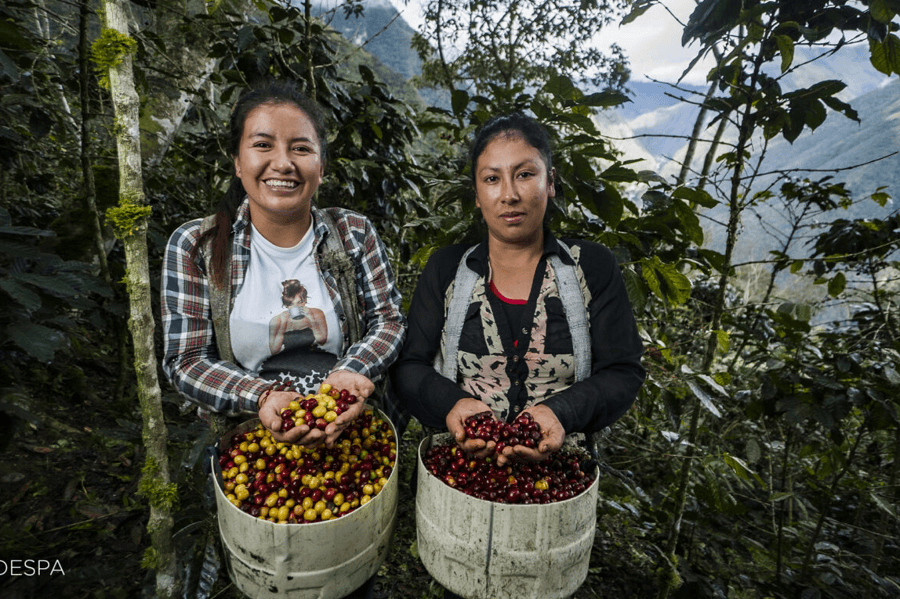
CODESPA Peru, in partnership with the savings and credit cooperative NORANDINO and with the financial support of the Spanish Agency for International Development Cooperation (AECID), is making significant progress in Bagua and Utcubamba thanks to a financial education program integrated with the circular economy approach. This initiative seeks to help rural enterprises, especially those led by women coffee producers, manage their resources better, reduce waste, and generate new economic opportunities from the use of by-products such as dehydrated coffee pulp.
The project is contributing to rural associations strengthening their financial planning, improving decision-making, and adopting sustainable practices that allow transforming waste into value-added products, diversifying income and reducing environmental impact. These actions are consolidating a change in mindset in communities, where good money management goes hand in hand with the conservation of natural resources and more efficient production.
CODESPA highlights that this effort demonstrates that the circular economy does not depend solely on infrastructure or technology, but on training processes that promote skills, knowledge, and new forms of organization. The combination of financial education, sustainability, and intelligent use of resources is generating social and economic impacts that strengthen producer families and consolidate more sustainable development in the Amazon region.