
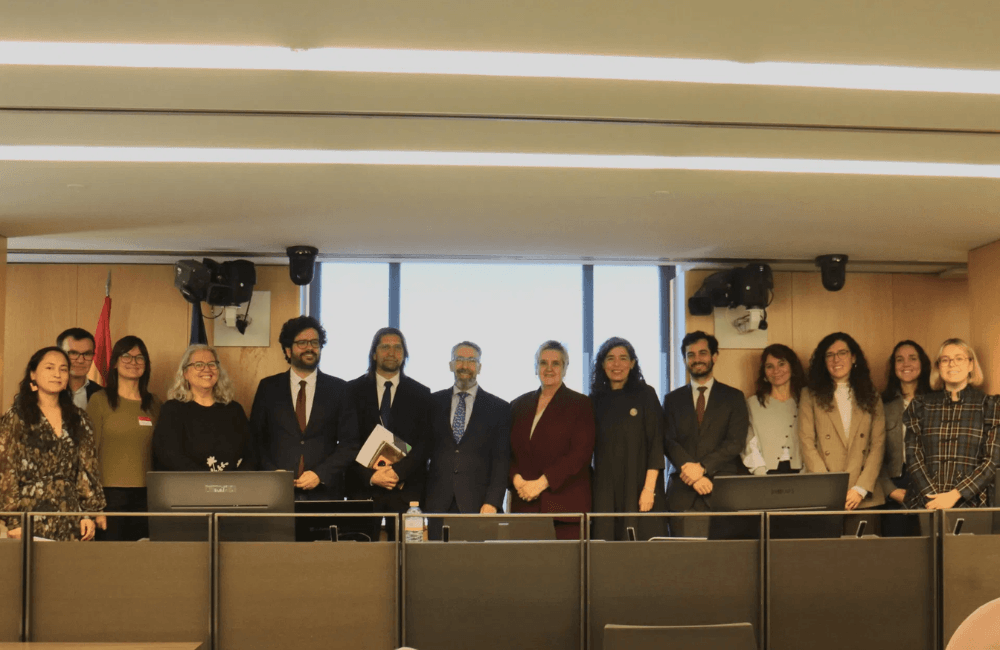
Ayuda en Acción warned about the deep deterioration of access to and retention in education faced by thousands of adolescents in Central America, following the presentation in the Congress of Deputies of the report “Denied Education, Truncated Futures: Adolescents on the Move in the Face of the Educational Emergency in Central America,” prepared within the framework of the Global Campaign for Education that the organization promotes together with other social entities. The document reveals that only one in two adolescents manages to complete secondary education in countries such as El Salvador, Guatemala, and Honduras, a situation worsened by violence, extreme poverty, forced migration, and internal displacement.
The report states that the region’s educational systems are not prepared to respond to the reality of human mobility, which results in interrupted school trajectories, early dropout, and higher levels of exclusion. Among the main obstacles identified are administrative barriers to enrollment, the lack of psychosocial support for young people fleeing violent contexts, the impact of climate disasters on the continuity of classes, and a severe underfunding of education in emergency contexts, which barely receives a fraction of international humanitarian aid.
Ayuda en Acción also emphasizes that this educational crisis has a strong gender component, as adolescent girls, especially indigenous ones and those in situations of mobility, face additional risks such as sexual violence, early pregnancies, and the overload of caregiving tasks, factors that push them out of the educational system. In this scenario, the organization calls for inclusive public policies, greater investment, and a coordinated response that guarantees the right to education as a key element to protect youth and prevent an entire generation from seeing their future truncated in the Central American region.